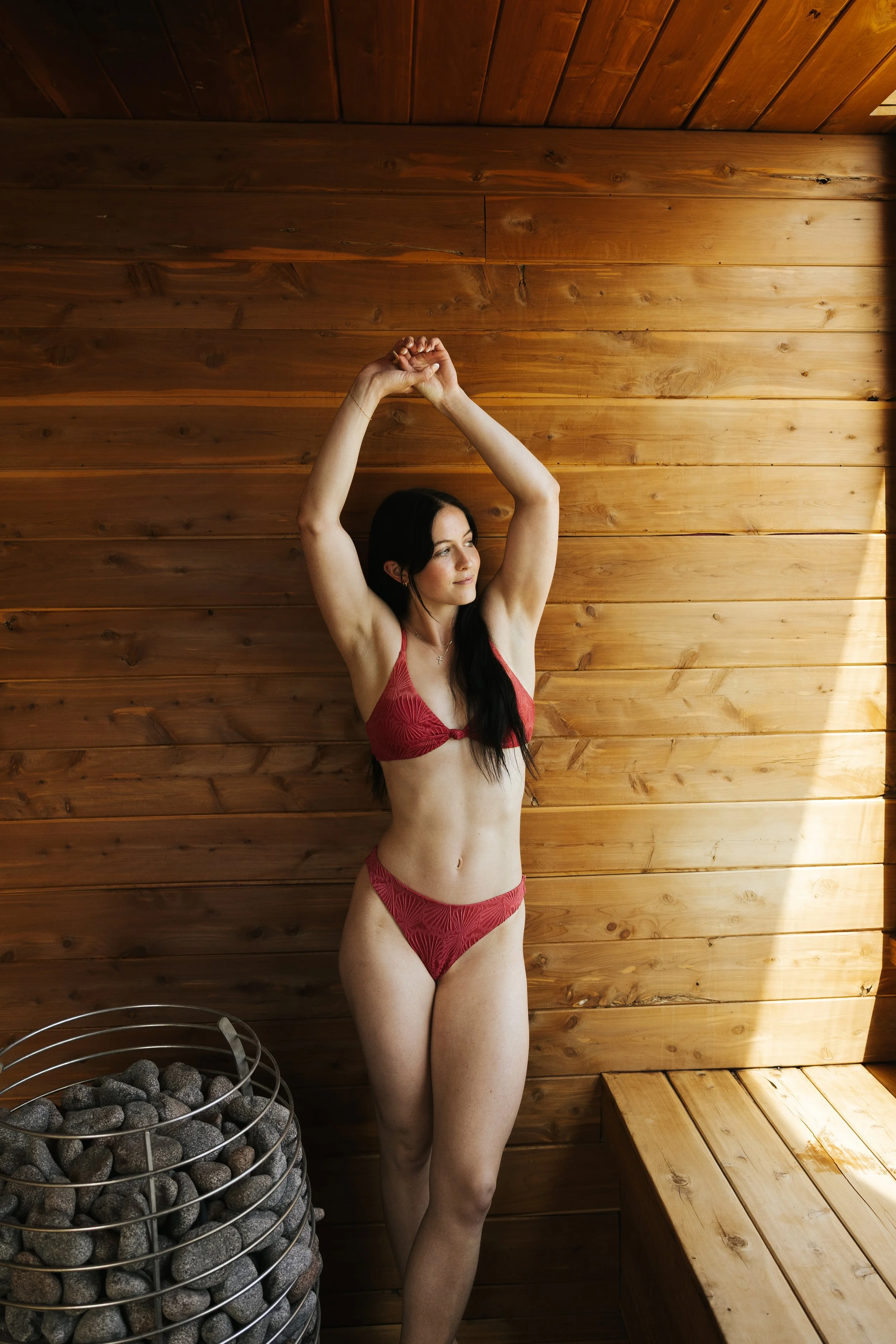
Traditional Dry Sauna in Vineyard, Utah
Deliberate Wellness Studio has a custom-built traditional dry sauna in Vineyard, Utah, serving Orem, Provo, Lehi, and American Fork. It runs hot — 185°F to 195°F — and seats about twelve.
The dry sauna is part of our 60-minute contrast therapy session, priced at $30.
What is a traditional DRY sauna?
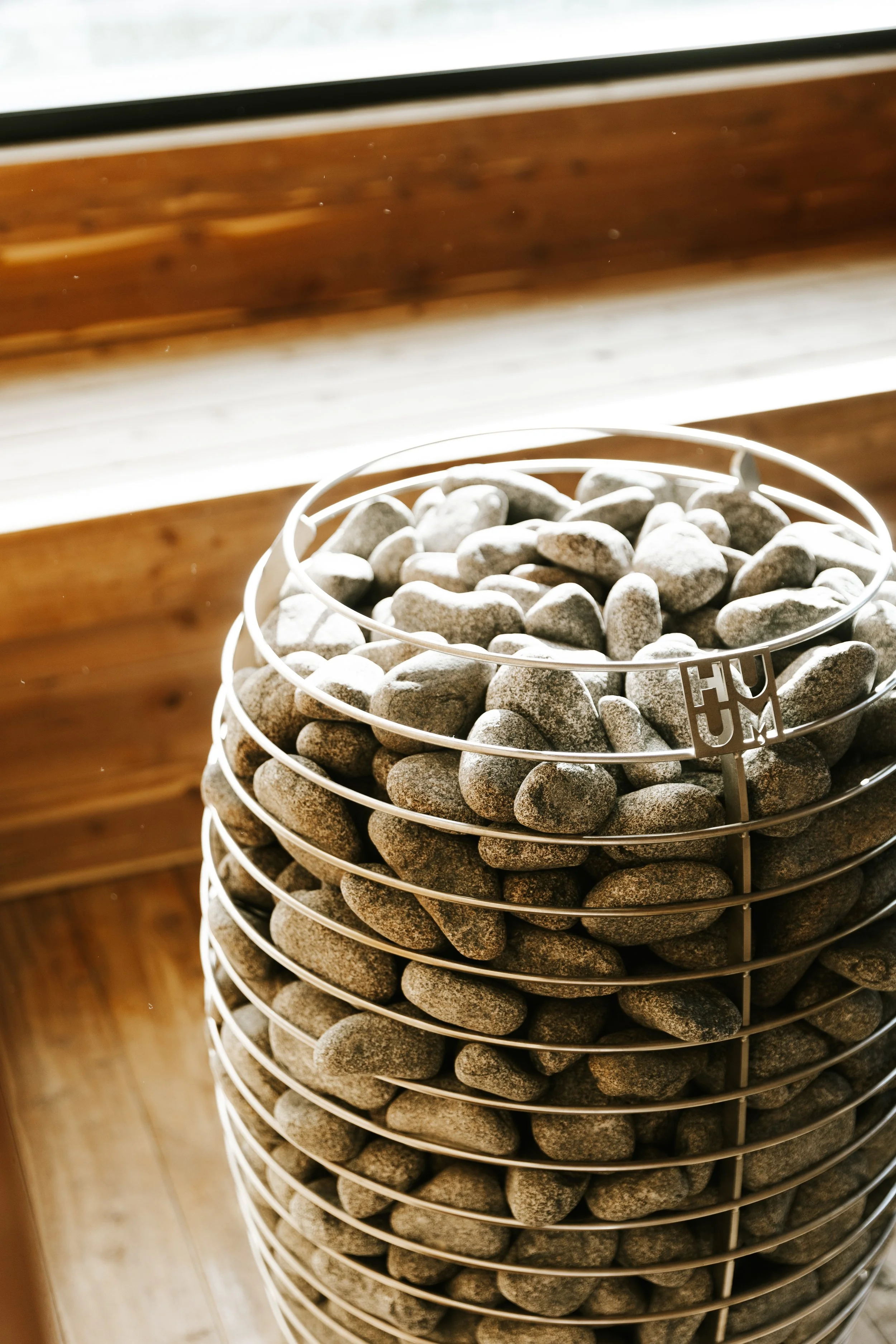
A traditional dry sauna heats the air in the room to a high temperature, usually somewhere between 170°F and 200°F, at low humidity. Your body warms from the outside in. This is the Finnish sauna format, and it's the oldest continuous sauna practice in the world.
The experience is different from infrared in a way that's hard to convey until you've done both. Dry sauna heat is immediate and enveloping. You feel it the moment the door closes.
Our dry sauna
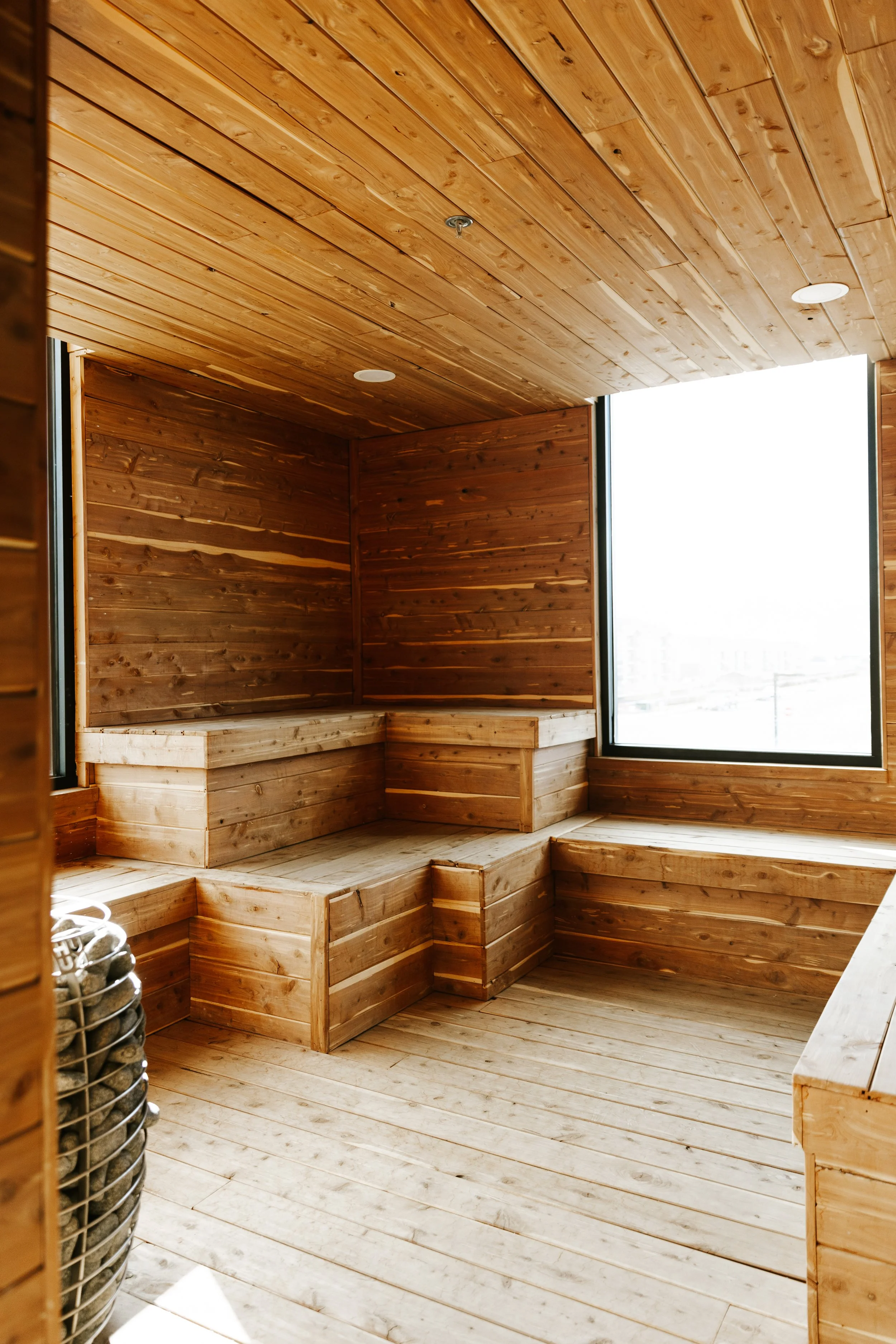
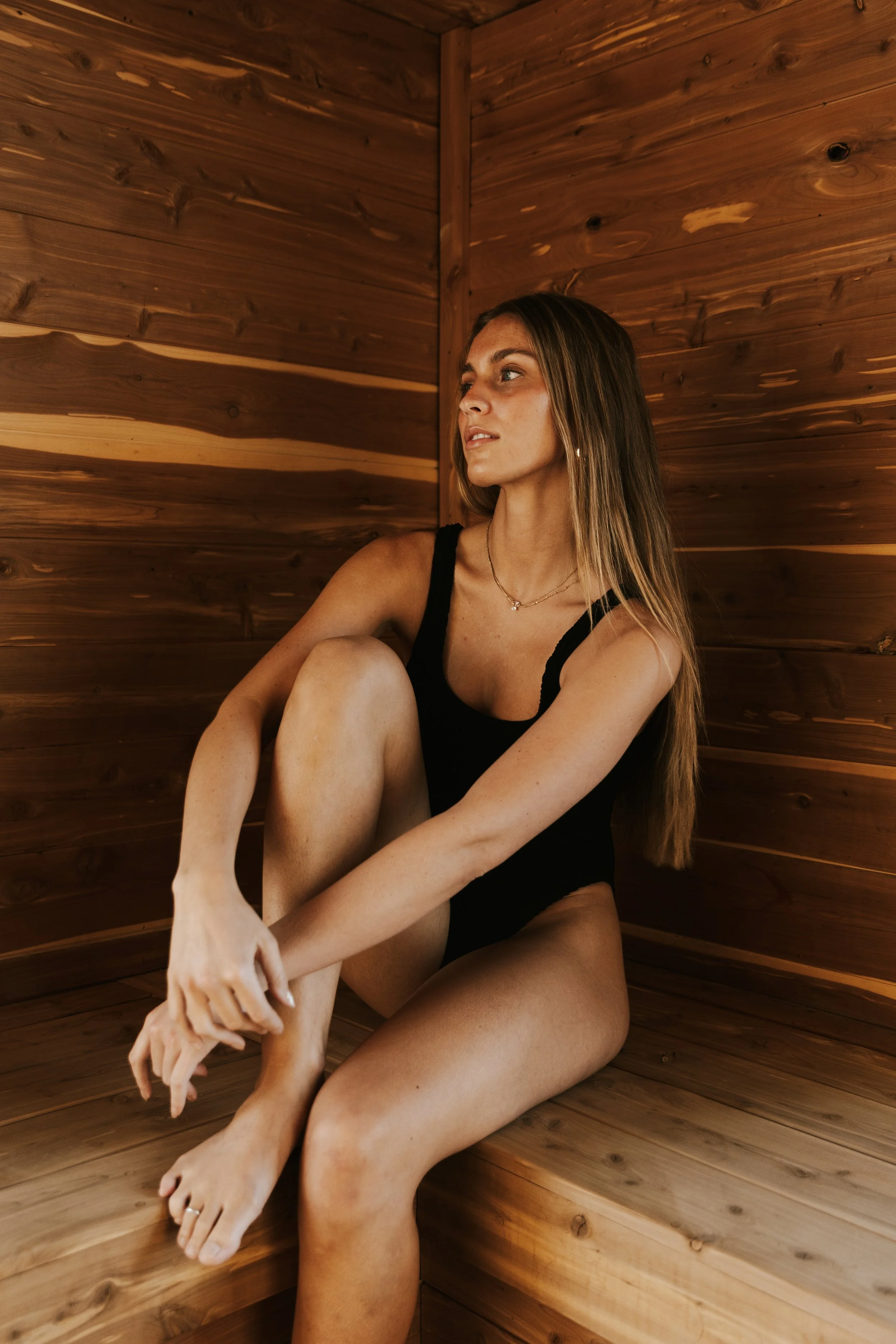
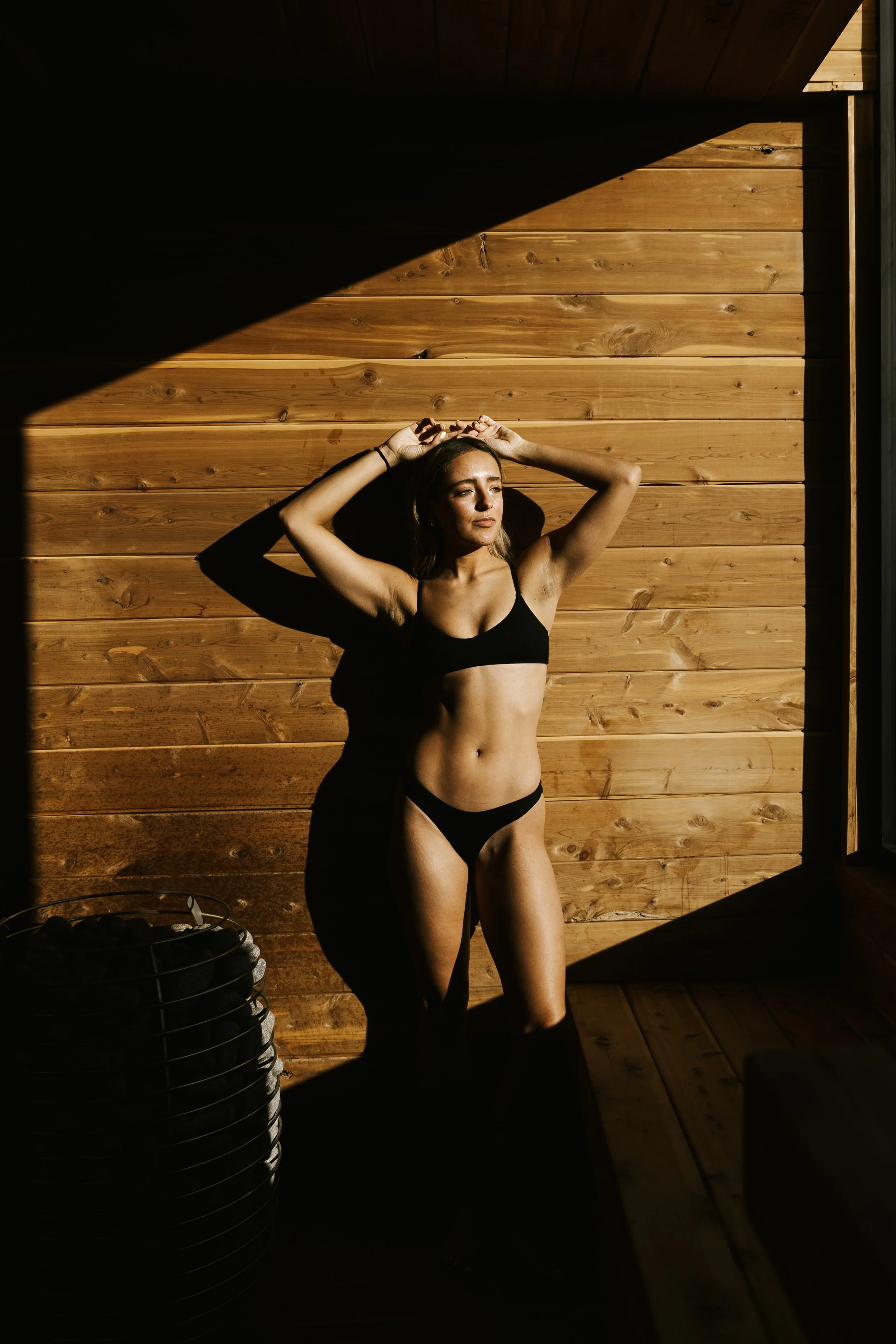
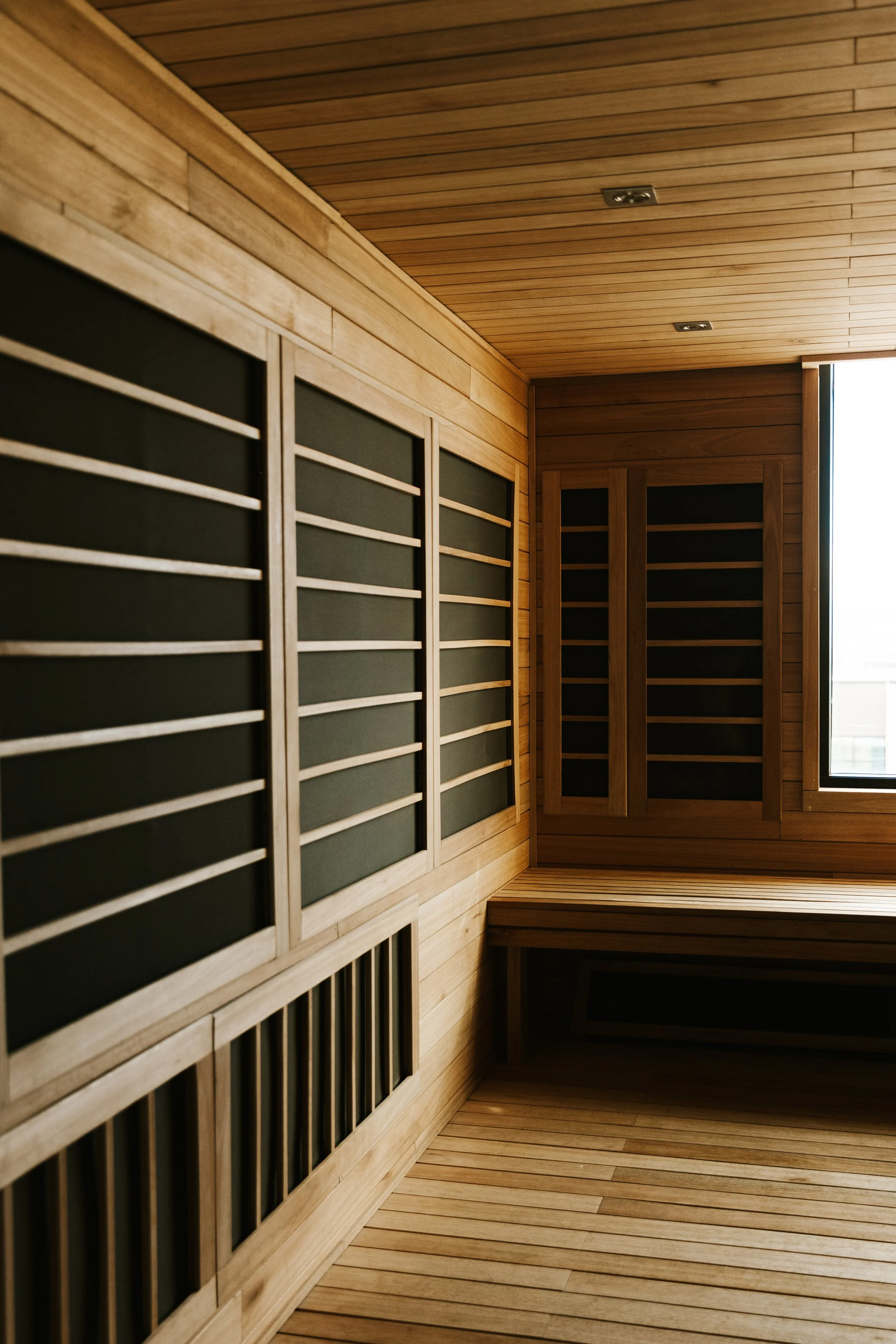
Custom build in premium western red cedar. Cedar is the traditional choice for a reason: it resists warping under repeated heat cycles, doesn't get uncomfortably hot to the touch, and produces the aromatic character people associate with sauna.
185°F to 195°F, usually toward the top of that range. We don't run it cool.
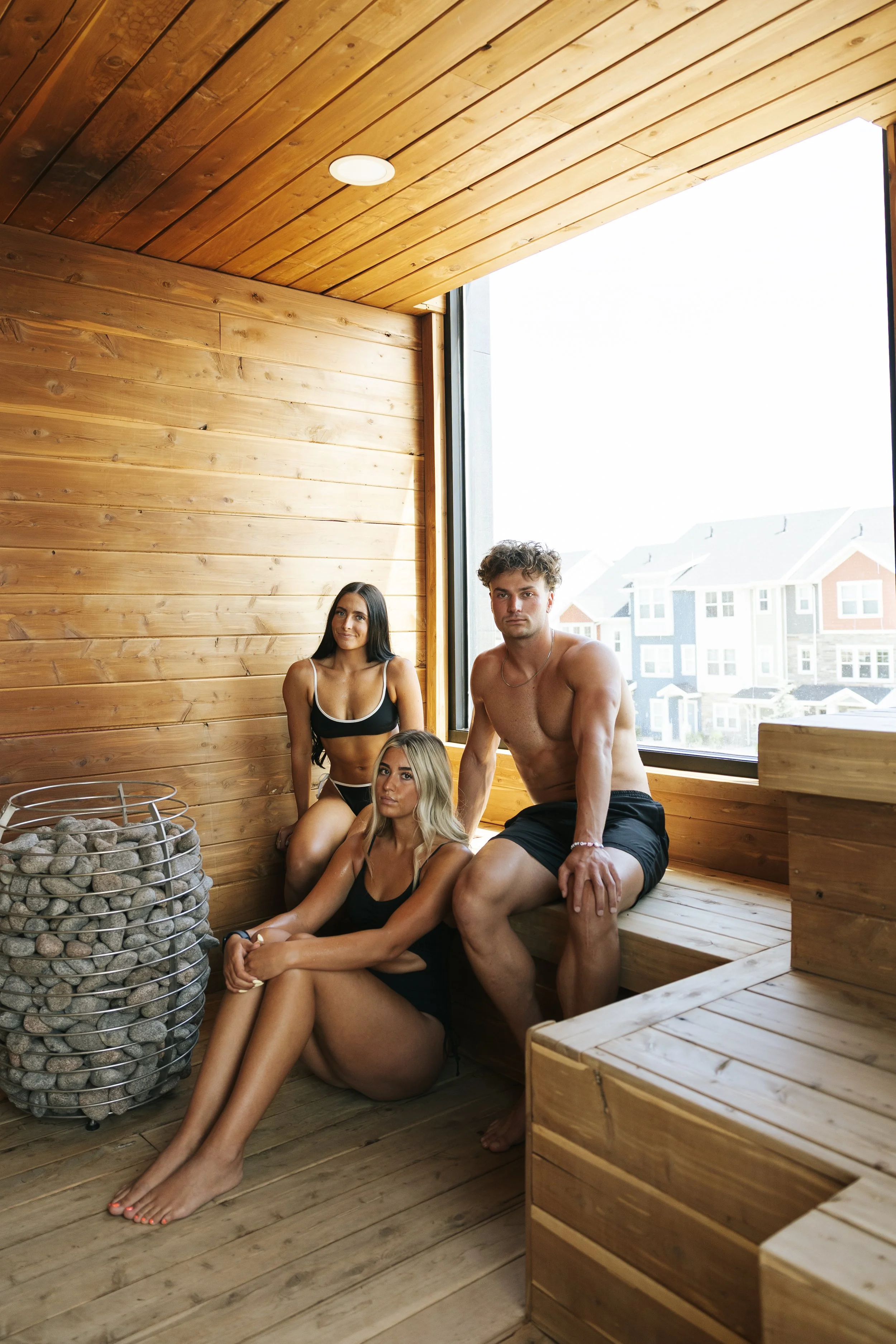
Seats about 12, and our whole suite caps at 8 guests, so there's always room to spread out or lie down on the upper bench.
Large windows and natural light. A sauna you can see out of is rare.
How hot should a sauna be?
Traditional Finnish saunas typically run between 170°F and 200°F. Ours sits near the top of that range at 185–195°F.
Heat stratifies — the upper bench can be 20 to 30 degrees hotter than the lower. If you're new, start low. If you want the full effect, go up.
Dry sauna vs. infrared
We have both in the same suite. The short version:
| Infrared Sauna | Traditional Dry Sauna | |
|---|---|---|
| Air temperature | 130–150°F | 185–195°F |
| How it heats you | Infrared light absorbed by the body | Hot air warming the skin |
| Feels like | Gentler, easier to breathe | Intense, enveloping |
| Typical session | 15–20 minutes | 10–15 minutes |
| Sweat onset | Gradual | Fast |
| Best for | Longer, calmer sessions | Quick, high-intensity heat |
If you're pairing sauna with cold plunge, the dry sauna gives you a sharper contrast because of the temperature gap.
What dry sauna may support
Traditional sauna has been studied more extensively than infrared, with a substantial body of observational research from Finland. Commonly reported effects include:
Cardiovascular response comparable to moderate exercise, from elevated heart rate under heat
Reduced muscle soreness and perceived recovery time
Relaxation and reduced perceived stress
Improved sleep quality
Much of the sauna research is observational, which limits what can be concluded about cause. Individual responses vary, and sauna is not a treatment for any medical condition.
How to use it
10 to 15 minutes is a full round at our temperature. That's shorter than infrared because the heat is more intense.
Lower bench first. Move up when you want more.
Leave when you want to, not on a timer. Heat tolerance varies day to day.
Cool down properly. Cold plunge, or just sit in the suite and let your heart rate come back down.
Hydrate more than you think. You lose more fluid here than in infrared.
Talk to your doctor before using a sauna if you're pregnant, have a cardiovascular condition, uncontrolled blood pressure, or take medication affecting heat regulation or blood pressure. Don't use a sauna after drinking alcohol.
Pricing and booking
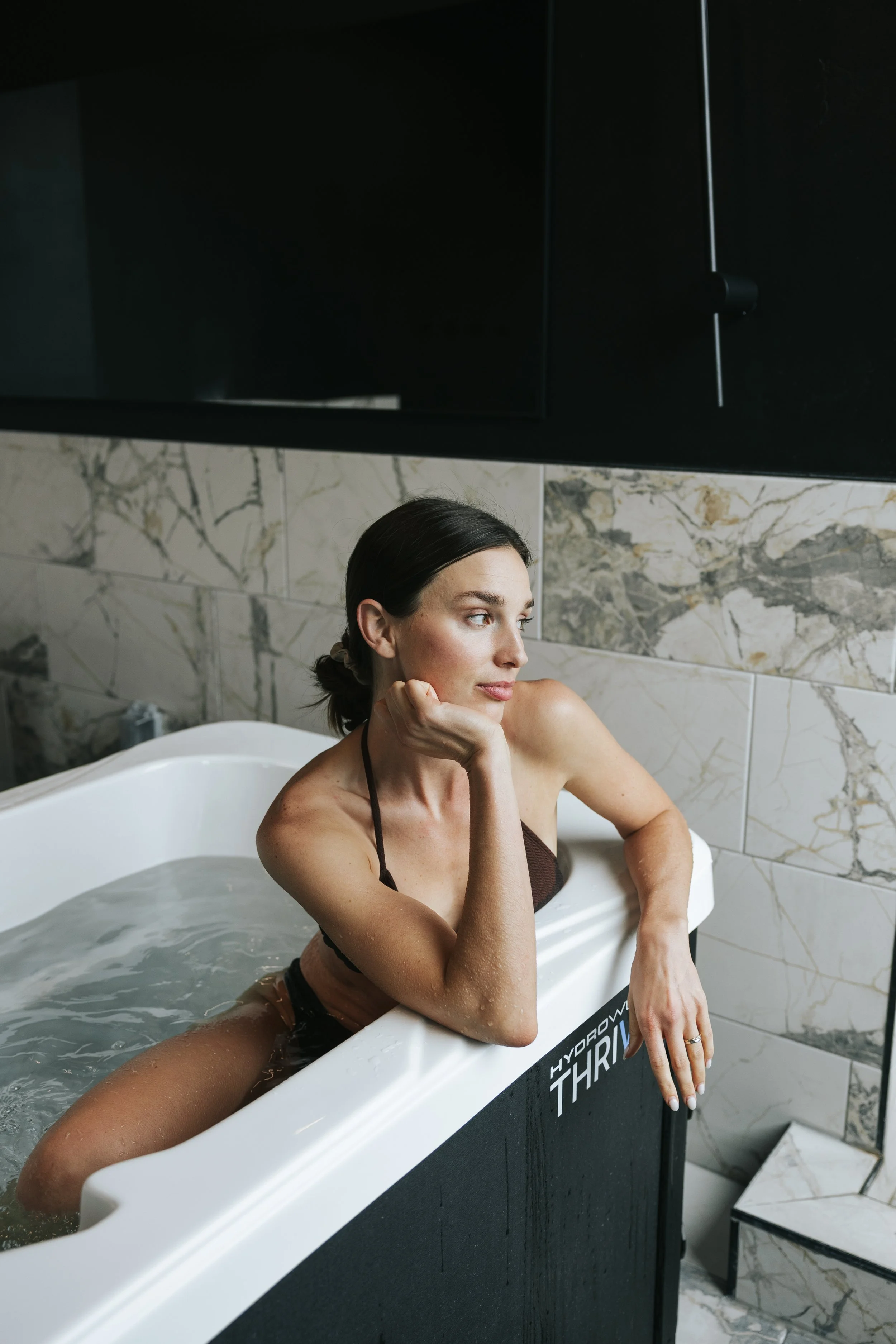
A 60-minute contrast therapy session is $30 and includes the dry sauna, infrared sauna, and cold plunge. No separate sauna-only rate.
Memberships, punch passes, and the unlimited week pass all include contrast therapy.
Frequently Asked Questions
-
Our traditional dry sauna runs between 185°F and 195°F, usually toward the higher end. That's within the standard Finnish sauna range.
-
Ten to fifteen minutes per round at our temperature. Most people do two or three rounds across a 60-minute session, with cold plunge in between.
-
A dry sauna runs hot at low humidity — ours is 185–195°F. A steam room runs much cooler, around 110–120°F, at near-total humidity. Deliberate has a dry sauna and an infrared sauna, not a steam room.
-
Premium western red cedar, custom built for our suite.
-
At Deliberate Wellness Studio in Vineyard, a 60-minute contrast therapy session is $30 and includes the traditional dry sauna, infrared sauna, and cold plunge.
-
Yes. The session includes everything but nothing is required. Plenty of people spend the full hour in the saunas.
-
The dry sauna comfortably seats about twelve. Our suite is capped at 8 guests, so it's never crowded.
-
Deliberate Wellness Studio is at 691 E 400 N, Suite 230 in Vineyard, about 10 minutes from Orem and 15 from Provo, Lehi, and American Fork.
Related services
Information on this page is for general education and is not medical advice. Sauna use is not intended to diagnose, treat, cure, or prevent any disease. Individual results vary. Consult your healthcare provider before beginning any new wellness practice.