Compression Boots Benefits: Do They Actually Improve Recovery?
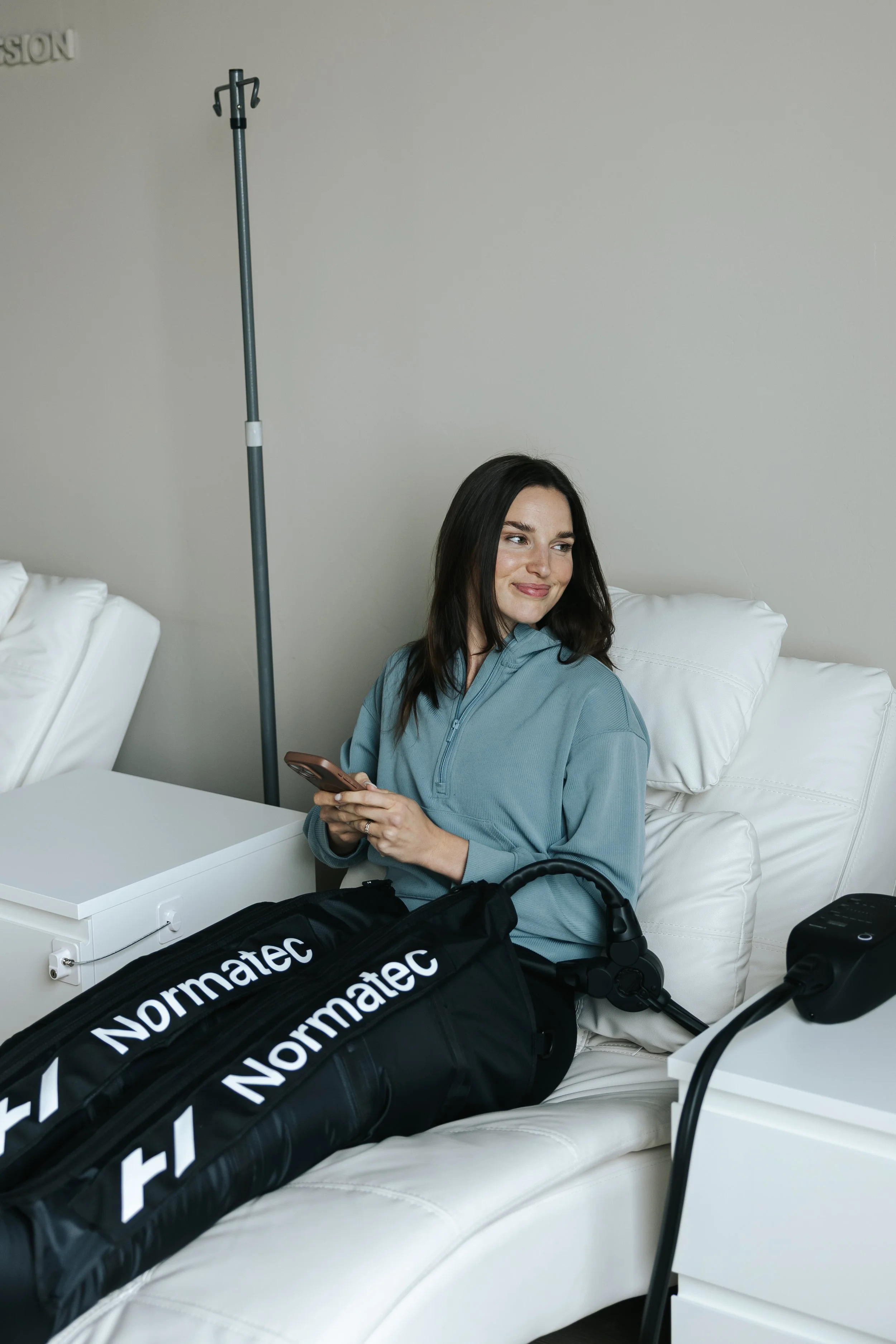
Compression Boots Benefits: Do They Actually Help You Recover?
If you have watched runners, cyclists or professional athletes recover with oversized inflatable sleeves wrapped around their legs, you have seen compression boots in action.
Compression boots use intermittent pneumatic compression to rhythmically squeeze the legs. They have become a staple in recovery studios because sessions are passive, comfortable and easy to combine with other wellness modalities.
But what are the real compression boots benefits? Can they improve circulation, reduce muscle soreness or actually make you recover faster?
The research is more nuanced than the marketing. Pneumatic compression appears useful for certain recovery outcomes, especially perceived soreness and circulation-related goals, but it is not a shortcut around sleep, nutrition or intelligent training.
What Are Compression Boots?
Compression boots are inflatable sleeves that cover the feet and legs. Multiple air chambers inflate and deflate in sequence, applying controlled external pressure.
This is known as intermittent pneumatic compression, or IPC. The technology has long-standing medical applications, including helping reduce venous stasis in certain clinical settings. Athletic recovery systems adapt the same general principle for healthy, active users.
Depending on the device, users can adjust pressure, session duration and compression patterns.
How Do Compression Boots Work?
When chambers inflate, they temporarily compress tissue and veins in the legs. Sequential compression can encourage venous return and movement of fluid from the extremities.
Once pressure releases, normal blood flow resumes. Repeating this cycle creates the massage-like sensation associated with pneumatic compression boots.
This does not literally “flush toxins” out of your muscles. That common marketing phrase is misleading. Your liver and kidneys perform detoxification. A more accurate explanation is that compression changes local pressure, venous flow and fluid movement.
What Are the Main Compression Boots Benefits?
1. Post-Workout Recovery
The most common reason people use compression boots is recovery after exercise. Studies examining intermittent pneumatic compression have found mixed but generally promising results for subjective recovery measures.
Some research suggests athletes may experience less perceived muscle soreness after demanding exercise. Objective performance measures do not improve consistently across every study, so it is better to view compression boots as one component of recovery rather than a guaranteed performance enhancer.
2. Temporary Support for Circulation
Sequential pneumatic compression promotes movement of venous blood from the legs toward the heart during treatment. This is why pneumatic compression has established uses in medical settings and why athletes often describe their legs as feeling lighter after a session.
For healthy users, the practical benefit is a passive modality that can be particularly appealing after long periods on your feet, travel or strenuous lower-body training.
3. Muscle Soreness
Delayed-onset muscle soreness, or DOMS, commonly peaks one to three days after unfamiliar or demanding exercise.
Compression boots may help some athletes feel less sore during this window. Systematic reviews suggest compression-based interventions can improve some recovery perceptions, though results depend on the protocol and type of exercise.
4. Passive Recovery
Not every recovery modality needs to be physically demanding. One advantage of compression boots is that you can sit or lie down while the system does the work.
That makes pneumatic compression easy to pair with relaxation, hydration or other low-stress recovery strategies. For an athlete already carrying a high training load, passive recovery can be especially attractive.
5. Leg Fatigue After Running, Cycling or Skiing
Endurance sports place repeated demands on the lower body. Compression boots are particularly popular among runners and cyclists because the sleeves treat large portions of both legs simultaneously.
They are also a natural fit for Utah athletes after skiing, hiking and mountain biking, when the legs may feel heavy even without a specific injury.
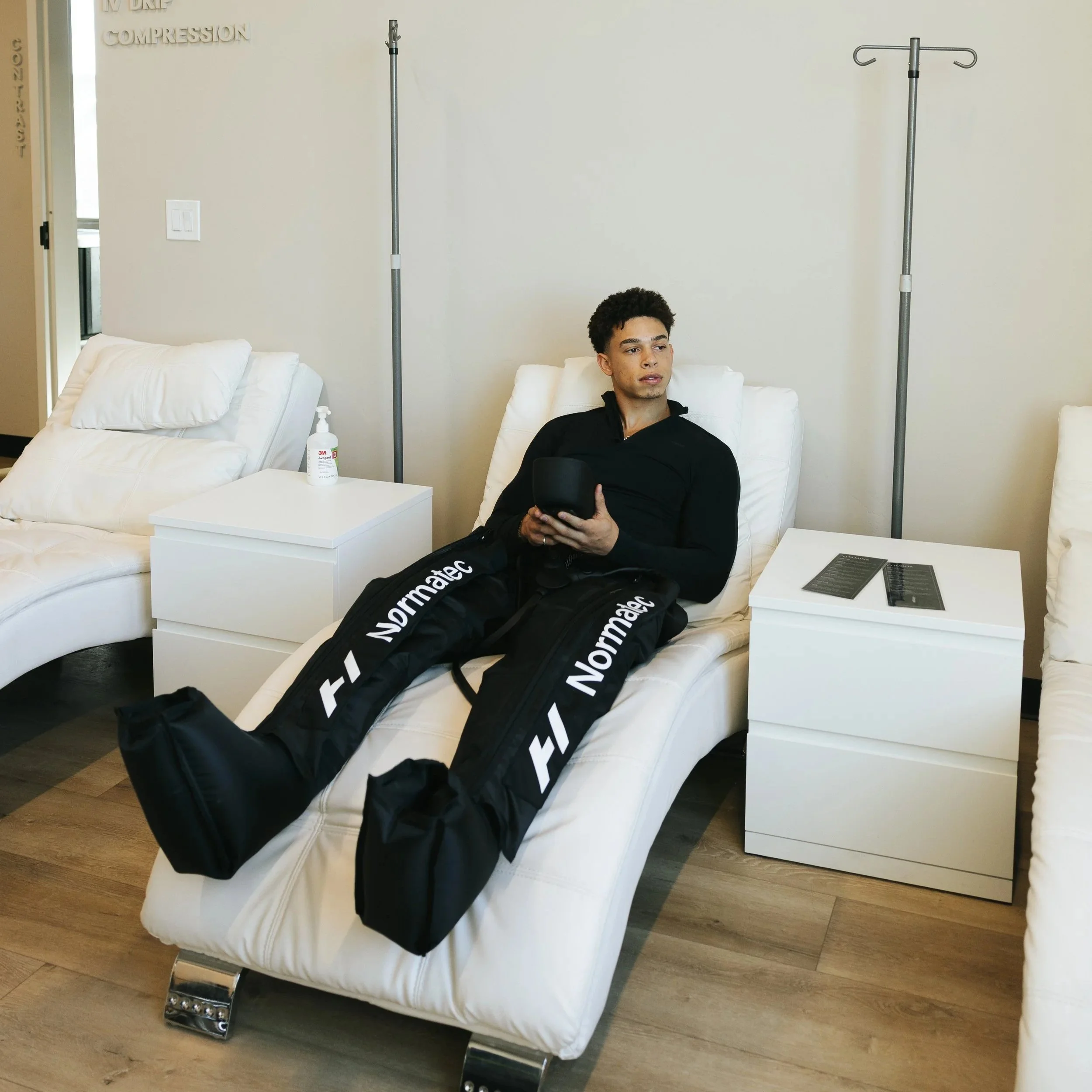
Compression Boots After a Workout: When Should You Use Them?
Compression boots can be used shortly after exercise as part of a cool-down and recovery routine. There is no universally proven “perfect” window.
A session later in the day can also make sense if that is when you can consistently relax and recover. Unlike aggressive cold-water immersion, pneumatic compression does not create the same concern about blunting strength-training adaptations through rapid tissue cooling.
How Long Should You Use Compression Boots?
Many commercial sessions run approximately 20–30 minutes, although protocols vary.
Higher pressure is not automatically better. The goal is firm, comfortable sequential compression—not pain, numbness or tingling.
If your feet become numb, your skin changes color significantly or the pressure feels painful, stop the session and seek guidance.
Compression Boots vs Massage
Both can feel good after hard training, but they work differently.
Massage involves manual manipulation of muscle and connective tissue and can target specific areas. Compression boots apply predictable, repeatable pressure across a much larger area of the legs.
Boots are particularly convenient when you want passive, consistent compression without scheduling a massage therapist for every recovery session.
Compression Boots vs Cold Plunge
Cold-water immersion creates a strong thermal stimulus and may reduce perceived soreness after hard exercise. Compression boots use mechanical pressure without making you cold.
For strength athletes concerned about frequent immediate post-lifting cold exposure, compression boots may be an appealing alternative. Some people also use both at different times depending on their training goals.
Do Compression Boots Improve Athletic Performance?
This is where expectations should be realistic.
The evidence is stronger for certain recovery perceptions than for dramatic improvements in subsequent athletic performance. A compression session will not make up for inadequate sleep, dehydration, poor nutrition or overtraining.
The best use case is as a convenient recovery tool that may help your legs feel better while supporting a consistent recovery routine.
Who Should Avoid Compression Boots?
Compression therapy is not appropriate for everyone. People with known or suspected deep vein thrombosis, severe peripheral arterial disease, acute infection, significant uncontrolled heart failure or certain vascular conditions should seek medical guidance before using pneumatic compression.
If you have unexplained one-sided leg swelling, warmth, redness or pain, do not simply put on compression boots—seek medical evaluation.
Compression Boots in Utah County
Deliberate Wellness in Vineyard offers compression recovery for active people throughout Utah County. Whether your legs are tired from running in Provo, lifting in Orem, skiing in the Wasatch, cycling around Utah Lake or simply spending long days on your feet, compression boots offer an easy way to make recovery part of your routine.
Compression can also pair naturally with other Deliberate Wellness recovery services such as red light therapy, sauna and contrast therapy.
The Bottom Line
Compression boots benefits are most compelling when viewed realistically. Intermittent pneumatic compression can temporarily influence venous flow and fluid movement, and research suggests it may improve perceived soreness or recovery in some exercise settings.
It is not a miracle performance device, but it is comfortable, passive and easy to use consistently—which makes it a useful tool for athletes and active adults who want to be more deliberate about recovery.
FAQs
-
Compression boots create measurable pneumatic pressure and influence venous flow. Research on athletic recovery suggests potential improvements in soreness and perceived recovery, although performance improvements are not consistent across all studies.
-
They can be. Post-workout pneumatic compression is a passive recovery option that does not add another strenuous stimulus to the body.
-
Frequency depends on the device, pressure and individual health. Healthy athletes often use them regularly, but more pressure and longer sessions are not automatically better.
-
Research suggests pneumatic compression may reduce perceived muscle soreness for some people after strenuous exercise, though responses vary.
Internal Links
Research notes: TF-IDF-style topical coverage includes intermittent pneumatic compression, sequential compression, venous return, circulation, DOMS, muscle soreness, recovery, lower extremities and exercise performance. Medical contraindications are included because compression is not appropriate for every user.