Infrared vs Traditional Sauna: What the Science Shows (And What’s Best for Your Health Goals)
If you live in Utah County and spend any time around wellness, performance, or recovery culture, you’ve probably heard people ask:
“What type of sauna is best for health?”
“Infrared vs regular sauna — which one is better?”
“Is a steam sauna better than an infrared sauna?”
Short answer: it depends entirely on your goals.
Both infrared and traditional saunas make you sweat, both feel amazing, and both can improve your health — but the mechanisms, heat intensity, and long-term benefits are very different. Instead of asking “Which sauna is better?” the more accurate question is:
What are you trying to accomplish?
This guide breaks down the real science behind Traditional Finnish Sauna vs Infrared Sauna, what the research shows, the differences in long-term outcomes, and how to choose the right option for your goals — whether you’re in Vineyard, Orem, Provo, Lehi, or anywhere in Utah County.
Summary
Traditional Finnish saunas use extremely high air temperatures to create intense thermal stress. This form of heat exposure has the strongest long-term evidence for cardiovascular, brain, and longevity benefits.
Infrared saunas use lower air temperatures and direct tissue heating, making them better for pain relief, inflammation reduction, recovery, autonomic balance, and relaxation.
They are not interchangeable. Many people get the best results from combining both — frequent gentle infrared sessions plus a few higher-intensity traditional sessions as a cardiovascular “stress dose.” Infrared’s popularity in Utah County reflects how well it fits the active, high-output lifestyle here, but Finnish sauna remains the gold standard for long-term health protection.
What Counts as a Traditional Finnish Sauna?

When most people imagine a sauna, they’re thinking of the classic Finnish dry sauna.
Typical characteristics:
Very high air temperature: 80°C–100°C (176°F–212°F)
Dry heat from heated stones
Steam created by pouring water on the stones
Shorter sessions: 10–20 minutes
Full-body thermal stress that elevates heart rate and breathing almost immediately
This is the sauna type at the center of nearly all major longevity, heart health, and brain health research.
The Study Everyone Talks About
Finland researchers followed over 2,300 men for more than 20 years to study how sauna frequency impacted long-term health.
Those who used a Finnish sauna 4–7 times per week saw:
63% lower risk of sudden cardiac death
50% lower risk of fatal heart disease
66% lower risk of Alzheimer’s and dementia
Reduced blood pressure
Improved vascular health
Lower inflammation markers like CRP
These benefits are why traditional saunas are often considered the best type of sauna for overall health and longevity.
The mechanism makes sense: intense heat raises heart rate, stimulates endothelial function, boosts circulation, and activates heat-shock proteins — all linked to reduced long-term disease risk.
What Counts as an Infrared Sauna?
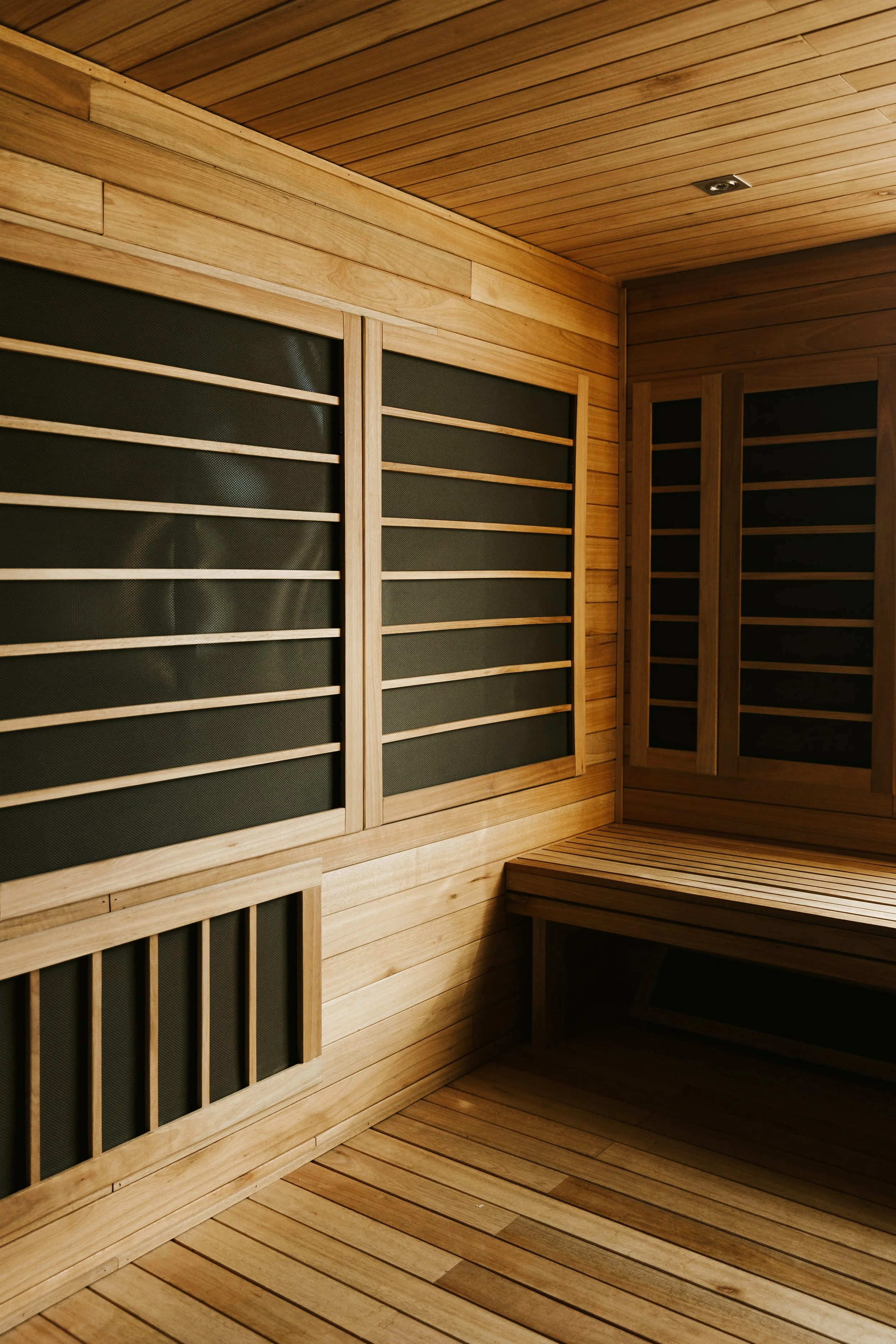
Infrared saunas operate completely differently.
Instead of heating the air first, infrared light penetrates tissues directly, warming you from the inside out.
Typical characteristics:
Lower temperature: 40°C–60°C (104°F–140°F)
Infrared waves heat the skin and muscles directly
Longer sessions: 30–45 minutes
Far more tolerable for heat-sensitive users
Because infrared heat feels gentler, people tend to stay longer, breathe more slowly, and relax deeply. This is also why infrared sauna blanket benefits are growing in popularity — they offer similar gentle heat exposure in a portable format ideal for at-home recovery.
Infrared saunas are extremely popular among athletes, chronic pain patients, and anyone who wants the benefits of heat therapy without the 200°F intensity.
What the Research Says About Infrared Sauna
Current studies show that infrared sessions can provide:
Significant pain reduction (fibromyalgia, osteoarthritis, chronic pain)
Lower inflammation markers (IL-6, TNF-alpha)
Improved HRV and parasympathetic balance
Better muscle recovery and less soreness
Potential mitochondrial and cellular repair benefits
Many users also report better sleep, reduced stress, and “lighter” overall feeling after sessions.
What’s missing?
Long-term outcomes.
Unlike Finnish sauna research, we don’t yet have 10–20 year mortality or dementia-risk data for infrared sauna.
Infrared vs Regular Sauna: Which Sauna Is Better?
Here’s where most people get it wrong.
They’re not interchangeable.
A traditional sauna creates intense thermal stress.
An infrared sauna creates gentle therapeutic heat.
Both are forms of passive heat therapy, but the stress signal to the body, and the physiological adaptations, are completely different.
If Your Goal Is: Longevity, Heart Health, and Brain Protection
Choose a traditional Finnish sauna.
This is the best sauna type for long-term health benefits because it’s the only one with:
Longitudinal, 20-year outcome data
Reduced risk of fatal cardiac events
Reduced dementia and Alzheimer’s risk
Proven cardiovascular conditioning
Deep heat-shock protein activation
Think of a traditional sauna as cardio through heat.
If Your Goal Is: Pain Relief, Recovery, Sleep, and Inflammation
Choose an infrared sauna.
Infrared is ideal for:
Chronic pain conditions
Muscle soreness and post-workout recovery
Improving HRV and nervous system balance
Heat-sensitive individuals
Daily gentle sessions
Relaxation and sleep enhancement
Think of infrared sauna as therapeutic heat without stress.
What About Steam Saunas?
People often ask: “What is better: steam or infrared sauna?”
Steam rooms use moist heat, which:
Improves airway moisture
Helps clear sinuses
Feels very different from dry sauna heat
For respiratory comfort, steam may be preferable.
But for heart health, longevity, or deep recovery, steam saunas do NOT have the same research support as either Finnish or infrared saunas..
Why Utah County Loves Infrared Sauna
From Vineyard and Orem to Highland, Alpine, and Lehi, infrared saunas are everywhere, and it makes sense. Utah County is:
Heavy in endurance sports
Full of high-intensity fitness communities
Home to busy professionals and young families
Surrounded by climbers, skiers, runners, and lifters
Infrared sauna matches this lifestyle perfectly:
long sessions, deep recovery, gentle heat, zero overwhelm.
If You Can Only Choose One Sauna…
If your top priority is longevity and cardiovascular benefits, choose a traditional Finnish sauna. The research is too strong to ignore.
If your main goal is recovery, inflammation reduction, sleep, or daily stress relief, go with an infrared sauna.
If You Want the Best Results
Combine both:
Infrared sauna 3–5x per week for recovery, inflammation, and relaxation
Traditional sauna 2–4x per week for cardiovascular stress and long-term health
This combination mirrors what many high-level recovery experts recommend.
Final Takeaway
The question isn’t “Which sauna is better?”
It’s: What type of sauna is best for your health goals?
For heart health, brain protection, and longevity → Traditional Finnish sauna
For pain relief, muscle recovery, inflammation, sleep, and gentle daily heat → Infrared sauna
For respiratory comfort → Steam sauna
For at-home convenience and gentle recovery → Infrared sauna blankets
Here in Utah County — where outdoor athletes, high-performance fitness, and longevity culture collide — there’s a place for all of them.